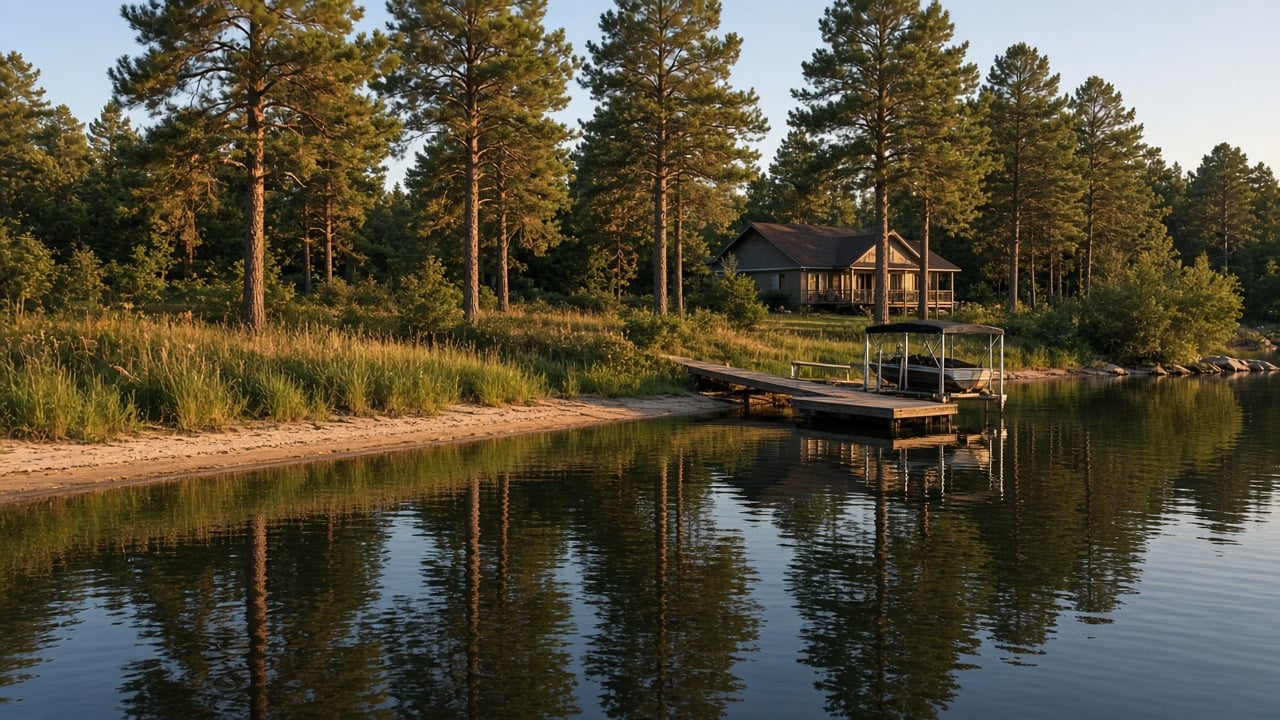
Shoreland Rules on Brainerd Area Lakes: What to Know Before You Buy or Build
October 30, 2026
A lot of lake buyers fall in love with a property and a plan at the same time. Tear down the old cabin and build new. Add a garage. Put in a sand beach. Move the deck closer to the water.
Sometimes that plan works. Sometimes the shoreland rules say no, or say yes with conditions that change the budget. The time to find out is before you write the offer, not after you close.
Shoreland rules are the local zoning standards that control what you can build, remove, or change near a lake. In Minnesota, counties and cities enforce them based on state shoreland standards. They cover setbacks from the water, how much of a lot can be covered by hard surfaces, lot size, septic placement, and vegetation near the shore. They matter because they decide what you can actually do with the property you buy.
In the Brainerd Lakes Area, the rules that apply depend on where the property sits. A home on a lake in rural Crow Wing County may follow the county ordinance. A home inside city limits in Nisswa, Baxter, Crosslake, or Breezy Point may follow that city's ordinance. Cass County and Aitkin County have their own. The details vary, which is why "my neighbor did it" is not a plan.
Minnesota assigns lakes a shoreland classification. The common ones are General Development, Recreational Development, and Natural Environment. Each class comes with its own standards.
As a general pattern, larger, busier lakes tend to allow more density, and smaller, quieter lakes tend to have stricter standards. That can mean a larger required setback from the water, larger minimum lot sizes, and less flexibility on what goes where.
For buyers, this is worth checking early. Two lots that look similar on a map can carry very different building rules if they sit on lakes with different classifications. Your county or city zoning office can tell you the classification and the standards that go with it.
A setback is the minimum distance a structure must sit from something, most often the ordinary high water level of the lake. There are also setbacks from roads, property lines, bluffs, and septic systems.
Here is where lake buyers get surprised. Many cabins in our area were built decades ago, before current setbacks existed. Some sit closer to the water than today's rules allow. Those structures are often called nonconforming. They can usually stay, but expanding them, rebuilding them, or replacing them can trigger rules that limit what you can do.
If your plan is to tear down and rebuild, ask what the new home would need to look like under current rules. In some cases the new structure has to move back from the water, which changes the view, the layout, and sometimes whether the plan makes sense at all.
Impervious surface means anything water cannot soak through. Roofs, driveways, patios, sidewalks, and sheds all count. Shoreland ordinances limit the share of a lot that can be covered by these surfaces, because runoff carries sediment and nutrients into the lake.
This is the rule that most often stops a garage. A lot can have room for a garage on paper and still be at or near its impervious limit because of a long paved driveway, a big deck, and an existing shed. Some buyers solve it by removing hard surfaces elsewhere. Some cannot solve it at all.
If a garage, a bigger driveway, or a guest cabin is part of why you want the property, ask for a rough impervious calculation before you commit. A survey and a conversation with the zoning office are the cleanest way to get there.
Sometimes, with limits. Shoreland rules often protect a strip of natural vegetation along the water. Clearing that area, adding sand, building retaining walls, or placing rock riprap may require a permit from the county, the Minnesota DNR, or both, depending on the work and the location.
Aquatic plant removal in the lake itself also has rules. Some limited removal near a dock is often allowed, but larger areas or certain methods usually require DNR approval.
For buyers, this matters because the shoreline you see today is likely the shoreline you will have. If a sandy, weed free swimming area is a must, look for a property that already has it rather than planning to create one.
Docks and lifts are usually allowed, but there are standards on size, placement, and configuration. Decks are treated as structures, so they generally count toward setbacks, and some count toward impervious surface depending on how they are built.
A large lakeside deck or patio on an older property may itself be nonconforming. That is not always a problem for a buyer who plans to keep things as they are. It is worth knowing if you plan to replace or expand it.
You do not need to become a zoning expert. You do need a short list of questions answered before your plan and your purchase price get tied together.
Here is what we suggest checking:
If your plans are significant, it can make sense to write your offer with time to confirm them. Your agent can help you structure that.
Sellers benefit from having answers ready. Buyers who see a lake home with an older cabin close to the water will ask what can be done with it. A clear answer removes doubt.
Before you list, it helps to gather any surveys, permits, septic records, and variance documents you have. If you know a structure is nonconforming, say so plainly. If you know the property has room for a garage or an addition under current rules, that can be a real selling point, and it is worth confirming before you advertise it.
Sellers should also be careful with promises. "You could easily build a garage here" is a statement a buyer may rely on. Let the zoning office answer that one.
Shoreland rules shape what a property can become, and that affects what buyers will pay. A lot with room to build, good setbacks, and clean permit history gives a buyer options. A lot with an older nonconforming cabin and little room to change it may appeal to a narrower group of buyers.
Neither one is a bad property. They are different properties, and they should be priced and marketed that way. Lake values and inventory around Brainerd change often, so any pricing conversation should be based on current comparable sales, verified at the time you buy or sell.
Start with the zoning or land services office for the county or city where the property sits. They can confirm the lake classification, setbacks, impervious limits, and permit history. For shoreline and in lake work, the Minnesota DNR is the other key contact. A licensed surveyor can map the details that matter.
We help buyers and sellers sort through these questions every season across Nisswa, Crosslake, Brainerd, Crosby, Deerwood, Baxter, Breezy Point, Pequot Lakes, and the surrounding lakes. The goal is simple. Know what the property can be before you decide what it is worth to you.
Do shoreland rules apply to every lake home near Brainerd? Yes, every property within the shoreland area of a lake is subject to shoreland zoning. Which rules apply depends on whether the property is in a county, city, or township jurisdiction and on the lake's classification.
Can I tear down an old lake cabin and rebuild in the same spot? Sometimes. If the existing cabin is closer to the water than current setbacks allow, a rebuild may need to meet today's rules or get a variance. Ask the zoning office before you buy if a rebuild is part of your plan.
What counts toward the impervious surface limit? Roofs, driveways, patios, sidewalks, sheds, and other hard surfaces that water cannot soak through. Some decks count depending on construction. The local ordinance defines exactly what is included.
Do I need a permit to put in a sand beach or rock riprap? Often, yes. Shoreline alterations can require a county permit, a Minnesota DNR permit, or both. Check before starting any work along the water.
Will a nonconforming cabin hurt my ability to sell? Not necessarily. Many lake homes in the area are nonconforming and sell well. Clear documentation and honest disclosure help buyers understand what they are buying.
Who can tell me the shoreland classification of a lake? The county or city zoning office can confirm it, and the Minnesota DNR maintains lake classification information.
If you are looking at a lake home and have plans for it, or you are getting ready to sell one, we are happy to help you sort out the questions before they become problems.
Call or text me at 218-821-3312 or visit brainerdlakeshomesearch.com.
Noah Goedker Elevate Group | eXp Realty
Stay up to date on the latest real estate trends.
Whether you're buying, selling, or just exploring your options, Noah Goedker brings local insight and honest advice to every step of the process. Let’s move forward—together.