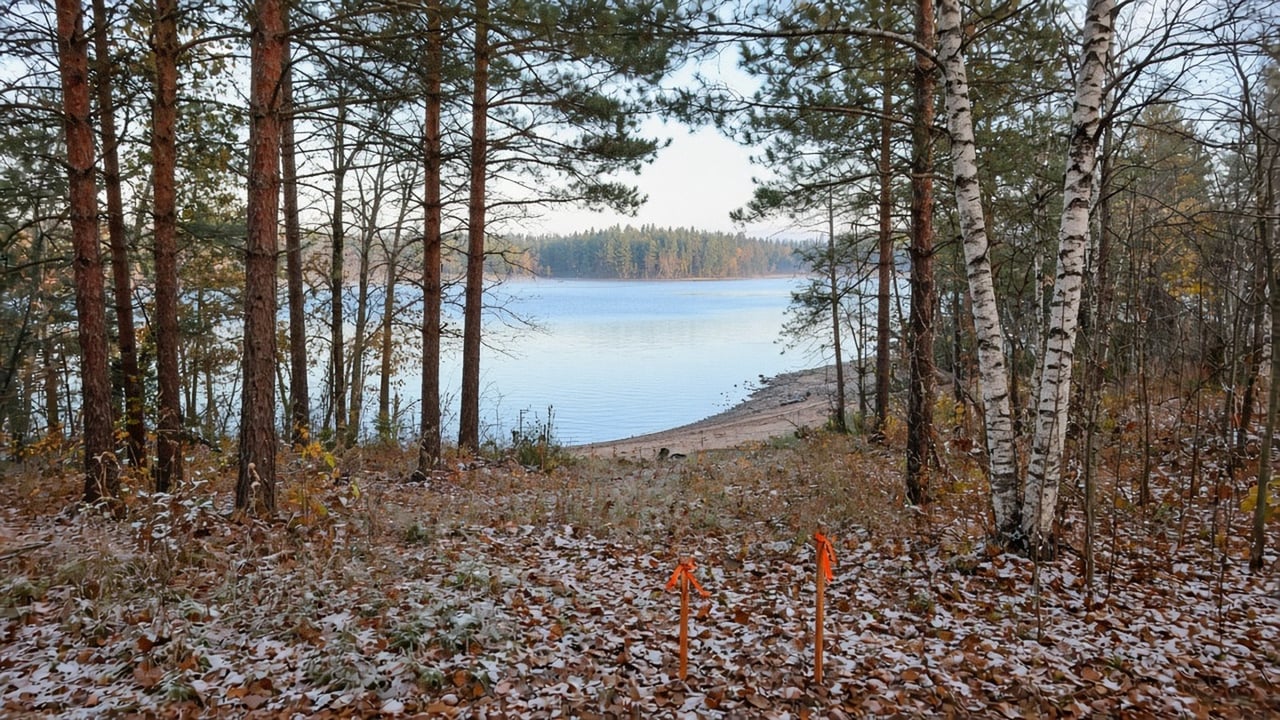
Buying a Lake Lot to Build On Near Brainerd: What to Check First
November 17, 2026
November 17, 2026
A vacant lake lot looks simple. No old roof, no tired kitchen, no mystery wiring. Just trees, shoreline, and a clean start.
That simplicity is a little misleading. With a lot, you are not buying a house. You are buying the right to build one, and that right depends on soil, setbacks, access, and permits you cannot see from the end of the driveway.
Here is the direct answer. Before you buy a lake lot around Brainerd, confirm that it can support a septic system, that your planned home fits inside the shoreland setbacks, that power and a well are realistic, and that the lot has legal year round access. Sellers should gather surveys, soil tests, and permit history before listing, because those documents answer the questions every serious buyer will ask.
When you buy an existing home, a lot of questions have already been answered. Someone got a permit, a septic system was installed, a well was drilled, and power runs to the house. You still inspect all of it, but it exists.
With a vacant lot, every one of those pieces is still a plan. The lot might be perfect. It might also have soil that will not pass a septic evaluation, or a building area so narrow that the home you have in mind will not fit.
That is why lot purchases reward patience. The best time to find a problem is before closing, while you still have options.
On most lake lots outside city sewer, this is the first question, and it can decide the whole deal.
In Minnesota, a septic system needs a suitable site, and a licensed designer or site evaluator typically looks at the soil, the depth to saturated soil, and the available space before a system can be designed and permitted. Some lots have plenty of good soil. Others have wet areas, heavy clay, steep slopes, or tight dimensions that limit what can be built or raise the cost.
If you are buying, ask whether a soil evaluation has already been done. If not, consider making your offer contingent on one. If you are selling, a recent evaluation from a licensed professional can make your lot much easier to understand and much easier to price.
Some areas around the lakes have shared or municipal sewer, which changes the conversation. Ask early which situation applies.
Lake lots in Minnesota are covered by shoreland rules. Those rules set how far a structure must sit from the water, how much of the lot can be covered by buildings and hard surfaces, and how close you can build to steep slopes and bluffs.
The exact numbers depend on the lake's classification and on who has zoning authority. Much of the area falls under Crow Wing County, while cities such as Nisswa, Crosslake, Baxter, Breezy Point, and Pequot Lakes may have their own ordinances.
The practical point is this. After you subtract the setbacks from the shoreline, the road, the side lot lines, and any steep slopes, the area left for a house can be smaller than it looks on a walk. A lot with wide frontage and shallow depth can feel generous and still have a tight building envelope.
Before you fall in love with a floor plan, ask the zoning office or a local builder to sketch where a house could actually go.
A lot near a paved road with power poles along the edge is a different project than a lot at the end of a long wooded lane.
For power, ask the electric cooperative or utility that serves the area what it would take to bring service to your building site, and how long it usually takes. Extending lines across a long lot or through trees can add real cost and time.
For water, most lake lots rely on a private well. A well driller familiar with the area can tell you what nearby wells have needed, though no one can promise exactly what a new well will find.
Internet and cell coverage vary a lot from road to road around the lakes. If you plan to work from the property, check providers by address before you buy, not after the walls go up.
Access has two parts, and both matter.
Legal access means the lot has a recorded right to reach a public road, either through direct frontage or a recorded easement. A trail that everyone has used for years is not the same as a recorded easement. Your title company and attorney can confirm what is on record.
Practical access means you can actually get there. Ask who maintains the road, whether it is plowed in winter, and whether there are seasonal weight limits that could affect concrete trucks, well rigs, and lumber deliveries. A private road shared with neighbors may come with a maintenance agreement, and it is worth reading before you commit.
The waterfront is usually the reason someone buys the lot, so look at it closely.
Walk the shoreline and note whether the bottom is sandy, rocky, or soft. Look at the depth off the end of where a dock would go, how much weed growth there is in summer, and which direction the lot faces. Wind, sun, and evening light all change how a lot feels.
Also ask about rules for clearing vegetation near the water, placing a dock or lift, and doing any shoreline work. Many of those activities have limits or require permits, and the shoreline you see today may be close to what you are allowed to have.
A short list goes a long way:
It is also reasonable to build contingencies into your offer for a soil evaluation, a survey, and a zoning review. Those protect you if a key answer comes back wrong.
Buyers of vacant land are often more cautious than home buyers, because they know how many unknowns a lot carries. Sellers who remove those unknowns tend to have better conversations.
Helpful items to gather include a current survey, any soil or septic evaluations, past permits, information about power and road access, and any association documents or covenants. If you have photos of the lot in summer, including the shoreline and the view from the likely building site, those help a winter buyer picture the property.
A clear path to building is one of the biggest factors in how buyers value a lot. Showing that path, instead of leaving buyers to guess, makes your lot easier to compare against existing homes.
It depends on the lot, the builder, the permit process, and the season. Soil evaluations and surveys are easiest when the ground is not frozen or buried in snow. Builders around the lakes are often scheduled well ahead.
If you buy a lot this winter, a realistic plan might be to use the cold months for design, bids, and permit questions, then start site work when the ground allows. Ask your builder and the zoning office about current timelines, since those change from year to year.
Buying a lake lot is part real estate, part site planning. We help buyers ask the right questions early, connect them with local surveyors, septic professionals, well drillers, and builders, and structure offers with the contingencies that make sense for the property.
We work in Nisswa, Crosslake, Brainerd, Crosby, Deerwood, Baxter, Pequot Lakes, Breezy Point, Emily, Pine River, Aitkin, and the lakes in between. We are not engineers or zoning officials, but we know who to call and what to look for.
Zoning rules, permit requirements, lot pricing, and inventory change often. Always verify current information with the local zoning office and the professionals working on your specific lot.
Start with the septic question. Ask whether a licensed professional has evaluated the soil, and consider making your offer contingent on a soil evaluation if one has not been done.
It depends on location. Much of the area is under Crow Wing County, but several cities, including Nisswa, Crosslake, Baxter, Breezy Point, and Pequot Lakes, may have their own zoning. Confirm which office covers the lot.
No. Shoreland rules set minimum distances from the water, limit how much of the lot can be covered, and restrict building near steep slopes and bluffs. The usable building area can be smaller than the lot looks.
Most rural lake lots rely on a private well and septic system, while some areas have shared or municipal service. Ask early, because it changes what the lot needs.
Not necessarily. Winter can be a good time to research and negotiate, but soil evaluations and some survey work are easier when the ground is open. Build realistic timelines into your offer.
A current survey, any soil or septic evaluations, permit history, information on power and road access, and any association documents or covenants. Summer photos of the shoreline also help.
If you are looking at a lot and want a second set of eyes before you make an offer, we are glad to help. Call or text Elevate Group at 218-821-3312, or visit brainerdlakeshomesearch.com to start your search.
Stay up to date on the latest real estate trends.
Whether you're buying, selling, or just exploring your options, Noah Goedker brings local insight and honest advice to every step of the process. Let’s move forward—together.