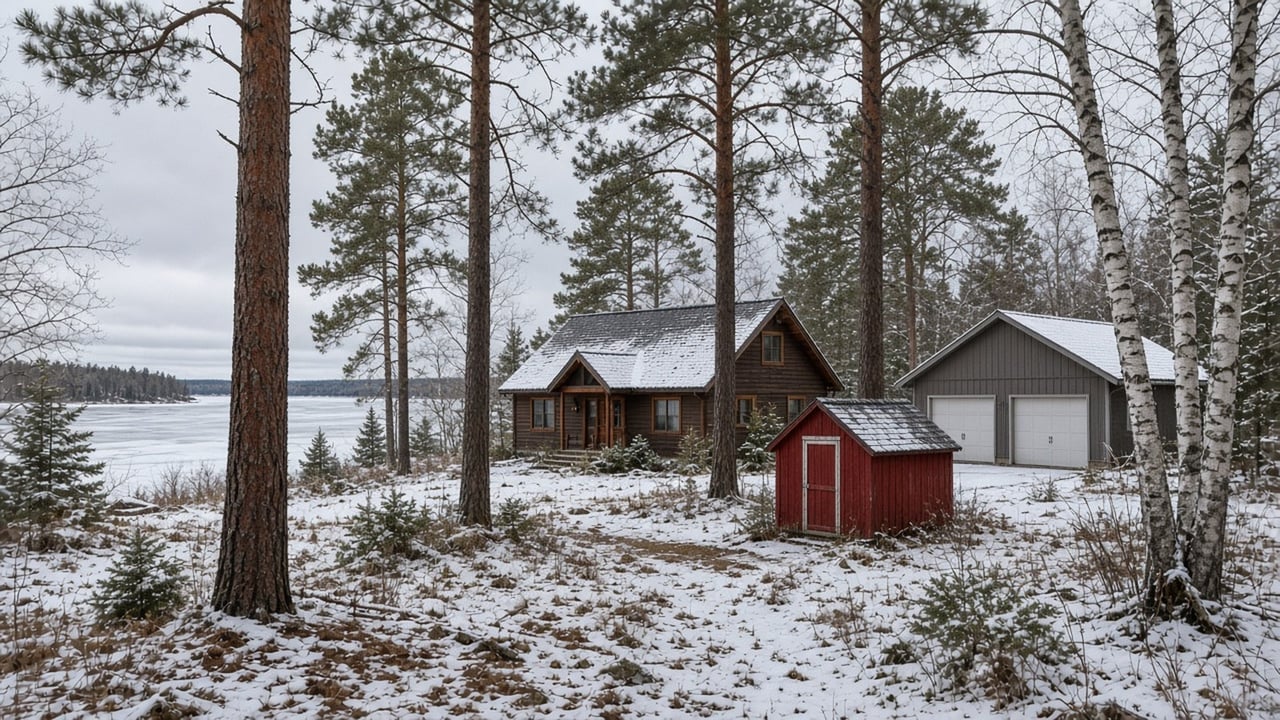
Garages, Bunkhouses, and Outbuildings on Brainerd Lake Homes: What Buyers and Sellers Should Check
November 20, 2026
November 20, 2026
The cabin is the reason you drove up. The garage is the reason you keep coming back.
Around the Brainerd lakes, the buildings next to the main house often matter more than people expect. A heated garage, a bunkhouse for the grandkids, a shed for the dock sections and the pontoon cover. These are the things owners talk about after a few years, not the kitchen counters.
Here is the direct answer. Outbuildings on a Brainerd area lake property can add real use and real value, but only when they are legally permitted, structurally sound, and allowed to be used the way you plan to use them. Buyers should confirm permits, setbacks, and any limits on sleeping or plumbing before they fall in love with a bunkhouse. Sellers should gather records and fix obvious problems before listing.
Lake living comes with gear. Docks, lifts, boats, kayaks, snowmobiles, ice houses, fishing equipment, lawn tools, and a lot of firewood. Most lake cabins near Nisswa, Crosslake, or Pequot Lakes were not built with storage in mind.
So the garage and sheds end up doing a lot of work. In our experience, buyers who own boats or sleds will rule out a property with no garage faster than one with a dated kitchen.
Guest space is the other reason. Many lake homes become the family gathering place. A bunkhouse or guest cabin lets more people stay without everyone sharing one bathroom. That kind of space has real value to the right buyer.
You will see a familiar mix on lakes from Gull to the Whitefish chain to the smaller lakes near Emily and Outing.
Detached garages. Some are simple unheated storage. Others are insulated and heated workshops with living space above.
Bunkhouses and guest cabins. Often older, sometimes the original cabin on the lot before the main house was built.
Storage sheds. Usually small, sometimes placed closer to the water than current rules would allow today.
Boathouses and water oriented structures. Gazebos, screen houses, and boat storage near the shoreline. These carry their own rules on many lakes.
Saunas. Common on older properties and more popular again in recent years.
Each type raises slightly different questions. The common thread is the same: was it built with permits, and can it be used the way you want?
This is the question we hear most, and it is the one with the most variation.
Shoreland and zoning rules around the Brainerd lakes are set by the county, city, or township that has authority over the property. Some places allow a guest cottage with limits on size and placement. Some limit sleeping quarters in accessory buildings or restrict plumbing in them. Some treat a second dwelling on one lot very differently from a storage building.
A bunkhouse that was legally built and permitted for sleeping is a real asset. One that was built as a shed and later fitted with beds may not be usable as sleeping space, even if the previous owner used it that way for years.
Buyers should ask the zoning office directly how a structure is classified. Do not rely on how the listing describes it or how the current owner uses it.
Septic systems are sized around how much the property is designed to handle, and bedroom count is a big part of that. If a bunkhouse adds sleeping space, it can change what the septic system is expected to support.
A guest cabin with its own bathroom also needs a proper connection to a compliant system. Plumbing that was added without permits can create problems at sale time, especially in areas where a septic compliance inspection is part of the transfer.
If the property already has a septic question, the bunkhouse makes that question bigger. Read our earlier guide on septic and well inspections for more on how that process works.
Older lake properties often have sheds, boathouses, or saunas closer to the shoreline than current rules would allow for new construction. Some of these are legally nonconforming, meaning they were allowed when built and can stay, often with limits on how they can be expanded or rebuilt.
That matters for two reasons. First, a buyer may assume they can enlarge or replace the structure the same way, and that may not be true. Second, if a nonconforming structure is badly damaged, rules may limit rebuilding in the same spot.
Buyers should ask whether a near shore structure is permitted or nonconforming and what that means for repairs. Sellers who have records showing when a structure was built and permitted should have them ready.
Start with the basics you would check on any building.
Foundation and slab. Look for cracking, heaving, or settling. Frost movement in Central Minnesota is real, and older slabs show it.
Roof and framing. Check for sagging, water stains, and signs of past snow load damage.
Doors and drainage. Make sure water drains away from the garage, not into it.
Electrical. Many garages were wired by an owner over time. Look for a proper panel or feed from the house, not extension cords and add ons.
Heat. If it is heated, ask what fuel it uses, how old the heater is, and whether it was installed with permits.
Living space above. If there is a finished room upstairs, ask how it was permitted. Living space over a garage raises the same zoning and septic questions as a bunkhouse.
A general home inspection may cover outbuildings only briefly or not at all unless you ask. Tell your inspector up front which buildings you want looked at.
Usually, yes. A good garage and usable guest space tend to help a lake home compete. But value depends on condition, legality, and fit.
A large heated garage on a modest cabin can appeal to buyers who care about storage and projects. A run down shed that leans toward the lake may be a cost, not an asset. A bunkhouse that cannot legally be used for sleeping is mostly storage with nicer windows.
Appraisers and buyers will look at what the structure is, not just what it is called. Pricing and buyer demand change often in the Brainerd lakes market, so any value question should be checked against current local sales.
A little preparation goes a long way here.
Gather records. Permits, building dates, and any septic records tied to guest space. If you do not have them, the county or city may.
Describe each building accurately. Call a storage shed a storage shed. Overstating a structure creates problems later in the transaction.
Clean them out. Buyers want to see the space, not your stored gear. A clean, organized garage photographs and shows far better.
Fix the obvious. Broken doors, missing shingles, rotted trim, and loose wiring are easy for a buyer to notice and easy to fix before listing.
Plan for winter showings. Clear a path to each outbuilding so buyers can walk to it and look inside. A garage nobody can get to in January is a garage nobody can value.
Treat each building as its own small inspection. Make a list of every structure on the lot and ask four questions about each one.
Was it permitted? What is it allowed to be used for? What condition is it in? What will it cost to maintain or bring up to standard?
Then decide which buildings actually matter to you. If you do not need a bunkhouse, its value to you is lower than it is to a family that does. That is fine. It helps you think clearly about price.
It depends on local zoning and how the structure was permitted. Some areas allow guest cottages with limits and others restrict sleeping quarters in accessory buildings. Ask the county, city, or township zoning office before you buy.
It can. Added sleeping space and plumbing can change what the septic system is expected to handle, and unpermitted plumbing can cause problems at sale time.
It is a building that was allowed when it was built but does not meet current rules, often because it sits closer to the water than new construction could. It can usually stay, with limits on expansion or rebuilding.
Not always in depth. Tell your inspector which outbuildings you want included so they are part of the scope.
Usually, when they are permitted, sound, and useful. Condition and legal use matter more than the label on the listing.
Permits and building records, accurate descriptions, clean and organized spaces, and easy repairs completed before photos and showings.
We help buyers and sellers across Nisswa, Crosslake, Brainerd, Baxter, Pequot Lakes, Breezy Point, and the rest of the Brainerd lakes area sort out the details that make a lake property work. Call or text 218-821-3312 or visit brainerdlakeshomesearch.com.
Stay up to date on the latest real estate trends.
Whether you're buying, selling, or just exploring your options, Noah Goedker brings local insight and honest advice to every step of the process. Let’s move forward—together.