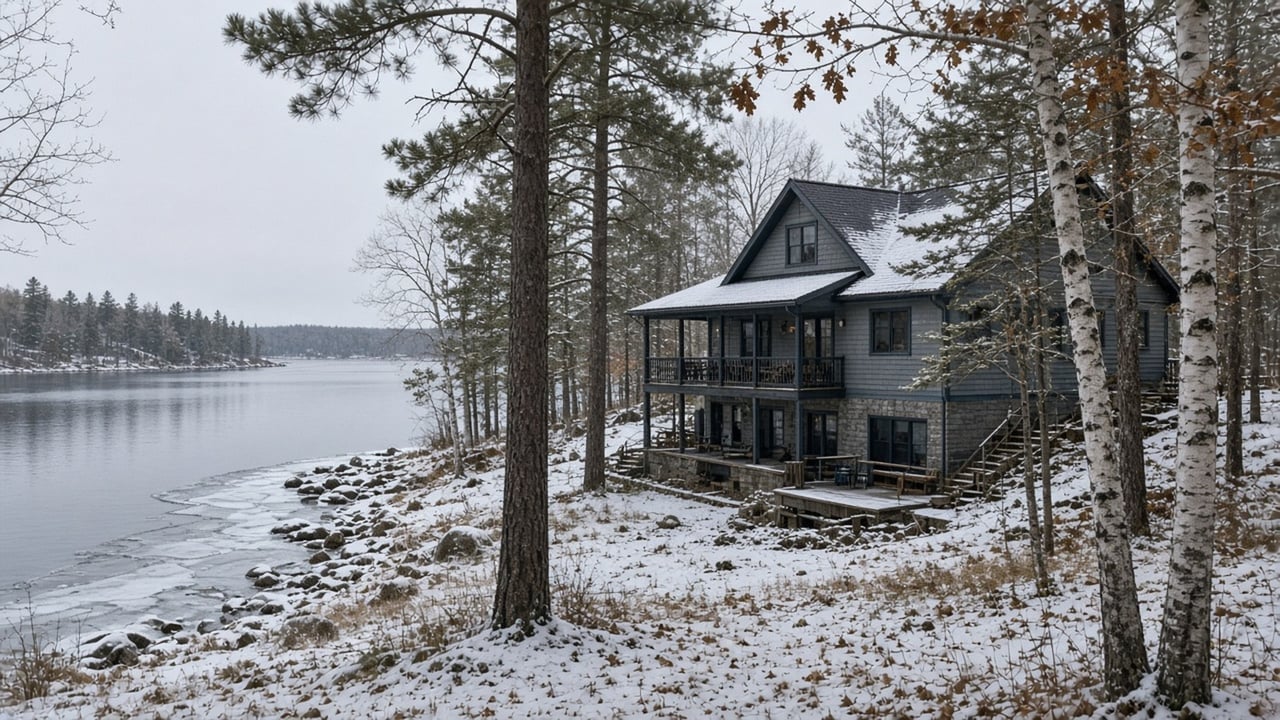
Radon Testing on Brainerd Lake Homes: What Buyers and Sellers Should Check
November 16, 2026
November 16, 2026
When people tour a lake home, they look at the view, the dock, and the kitchen. Almost nobody asks about the air in the basement.
You cannot see radon, smell it, or taste it. That is exactly why it gets skipped, and why it is worth a few minutes of attention before you buy or sell.
Here is the direct answer. Radon is a natural gas that comes from the ground, and it can build up in any Minnesota home, including lake homes and cabins. Buyers around Brainerd should ask for past test results, look for a mitigation system, and consider a new test during the inspection period. Sellers should know that Minnesota law requires a radon disclosure, and should gather any test results and mitigation records before listing.
Radon is a radioactive gas that forms as uranium in soil and rock breaks down. It moves up through the ground and can enter a house through cracks in the foundation, gaps around pipes, sump pits, crawl spaces, and other openings.
Outdoors, it spreads out into the air. Inside a closed house, it can collect, especially on the lowest levels.
The Minnesota Department of Health treats radon as a serious health concern, because long term exposure is linked to lung cancer. That is the reason it shows up in inspections, disclosures, and purchase conversations. It is not a reason to panic. It is a reason to test.
Radon levels depend on the soil and geology under each house and on how the house is built. Two homes on the same lake, even next door to each other, can test very differently.
What we can say is that many homes in the Brainerd Lakes Area have features that make testing worth doing. Walkout lower levels built into a slope, finished basements, crawl spaces under older cabins, and additions built over different foundations are all common here.
Lake homes also tend to be closed up tight in winter. When the windows are shut and the furnace is running, air in the house behaves differently than it does in July with every door open.
The only way to know the level in a specific home is to test that home.
Minnesota has a radon disclosure law for residential sales. In general, before a buyer signs a purchase agreement, the seller must disclose what they know about radon in the home. That includes whether the home has been tested, the results of any tests, and whether a mitigation system is in place, along with some details about it.
The seller also needs to provide a warning statement and a publication from the Minnesota Department of Health about radon in real estate transactions.
The law does not require the seller to test. It requires them to share what they know.
For sellers, that means digging out old test results and mitigation paperwork now, not the week an offer arrives. For buyers, it means you should see that disclosure early and read it carefully. Your agent can walk you through the form. For legal questions about the law itself, talk with a real estate attorney.
Most radon testing during a home purchase is a short term test. A home inspector or radon professional places a test device on the lowest level of the home that is used or could be used as living space, and it runs for a set period, often a few days.
The house usually needs to stay in closed house conditions during the test. That means windows and exterior doors closed except for normal coming and going. Results usually come back within days.
Long term tests run for months and give a better picture of the average level through the seasons, but they rarely fit a purchase timeline. Some buyers use a short term test to make a decision, then run a long term test after closing.
If you want a radon test, it is best to ask for it when you schedule the home inspection. Many inspectors in the area offer it as an add on.
Radon is measured in picocuries per liter of air, written as pCi/L. The Minnesota Department of Health currently recommends fixing a home if the radon level is at or above 4 pCi/L, and suggests considering it between 2 and 4 pCi/L. Check the department's website for current guidance, because recommendations can change.
A high result does not mean the house is a bad buy. Radon is one of the more fixable problems a house can have. It does mean you should talk about mitigation before you close.
The most common system pulls air from beneath the foundation or slab and vents it outside, usually with a pipe and a fan. You may see a pipe running up the outside wall or through the garage, and often a small gauge on the pipe in the basement.
In Minnesota, radon mitigation contractors must be licensed by the Minnesota Department of Health. Ask for the license, and ask whether the system was tested after installation.
If a house already has a system, buyers should ask:
A system that was installed and never retested is worth a fresh test. A fan that has quietly stopped working does not do much good.
Yes. In fact, winter is a reasonable time to test. Closed house conditions happen naturally when it is cold, and lower levels are used the same way they will be for much of the year.
The bigger issue with winter testing on lake properties is the house itself. If a seasonal cabin has been shut down, drained, or left mostly unheated, test results may not reflect how the home will behave once it is opened up and lived in. Talk with your inspector about how the home has been used and how to set up the test.
If you are buying in the colder months, our post on buying a lake home in late fall and winter covers what else you can still check.
Ask whether the home has ever been tested, when, by whom, and on which level. Ask for copies of the results, not just a summary.
Ask whether there is a mitigation system, and get the installation details. Ask whether any part of the lower level was finished, remodeled, or added after the last test, because changes to the house can change results.
Ask how the home is used. A cabin that sits empty for weeks at a time is different from a lake home lived in year round.
Then decide, with your agent, whether to include a radon test in your inspection contingency. It is usually a small cost compared to the rest of the purchase.
Find any past radon test results, including the date, level tested, and who ran the test. Find any mitigation records, including the contractor, installation date, and any post mitigation test.
Check that the fan is running and the gauge reads normally. If you have never tested, consider whether testing before listing makes sense for you. A known result, and a fix if needed, can take a question off the table before buyers ask it.
Be accurate on the disclosure. Buyers and their agents in this area see radon disclosures on nearly every sale. Clear records make the conversation simple. Missing or vague answers can slow things down.
We put radon on the same checklist as septic, well, heating, shoreline, and road access. For buyers, that means reviewing the disclosure early, building testing into the inspection period, and knowing who to call if a result comes back high. For sellers, it means having test results and mitigation records ready before the first showing.
We work in Nisswa, Crosslake, Brainerd, Crosby, Deerwood, Baxter, Pequot Lakes, Breezy Point, Emily, Pine River, Aitkin, and the lakes in between. We are not radon professionals, but we know the questions to ask and the local inspectors and licensed contractors who can answer them.
Radon guidance, disclosure requirements, and licensing rules can change. Always confirm current information with the Minnesota Department of Health and the professionals working on your specific property.
Do Brainerd area lake homes need a radon test? Any Minnesota home can have elevated radon, including lake homes and cabins. Levels vary from house to house, so the only way to know is to test the specific home.
Do Minnesota sellers have to test for radon? No. Minnesota requires sellers to disclose what they know about radon, including past test results and any mitigation system, and to provide information from the Minnesota Department of Health. It does not require a test.
How long does a radon test take during a home purchase? Short term tests commonly run for a few days under closed house conditions, and results usually come back within days. Ask for the test when you schedule your home inspection.
What radon level is considered high in Minnesota? The Minnesota Department of Health currently recommends fixing a home at or above 4 pCi/L and suggests considering it between 2 and 4 pCi/L. Check the department's website for current guidance.
Can radon be fixed? Yes. A mitigation system, usually a vent pipe and fan that draw air from under the foundation, can lower radon levels. In Minnesota, mitigation contractors must be licensed by the Minnesota Department of Health.
Is winter a good time to test for radon? Winter can be a good time because homes are naturally closed up. If a seasonal cabin has been shut down or left mostly unheated, talk with your inspector about how to set up the test.
If radon is one of your questions, we can help you sort it out along with everything else on the list. Call or text Elevate Group at 218-821-3312, or visit brainerdlakeshomesearch.com to start your search.
Stay up to date on the latest real estate trends.
Whether you're buying, selling, or just exploring your options, Noah Goedker brings local insight and honest advice to every step of the process. Let’s move forward—together.