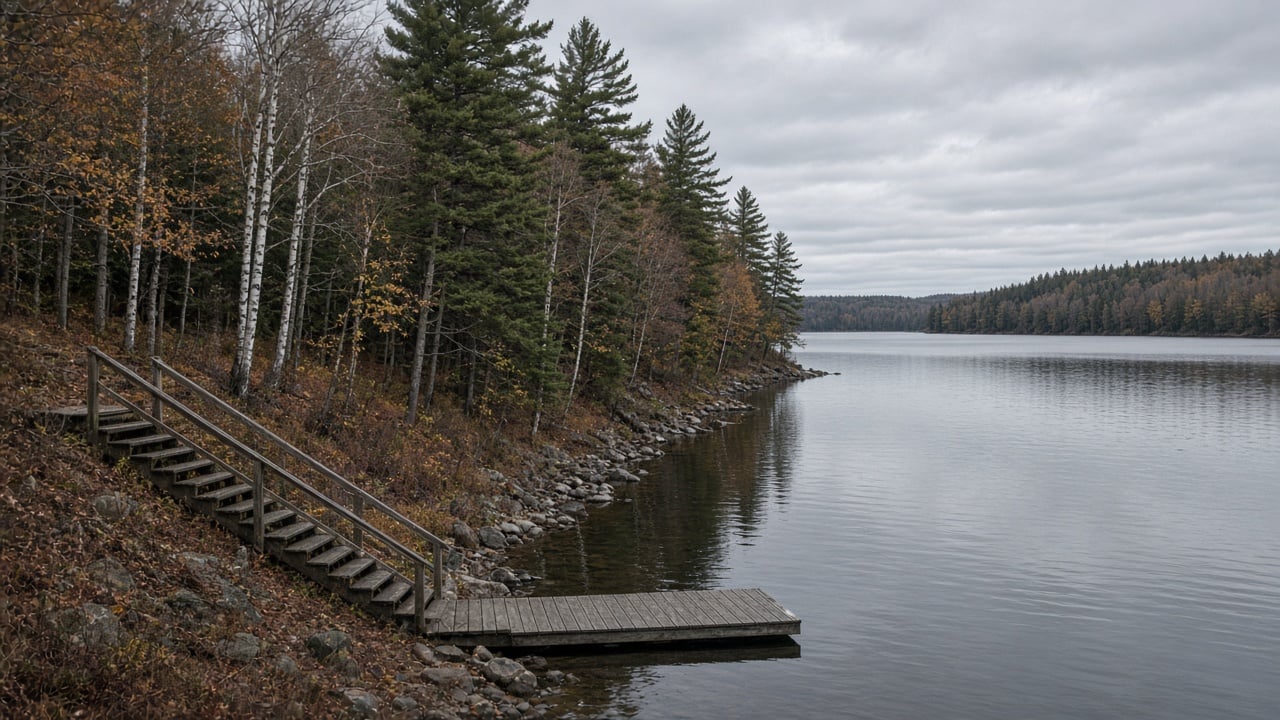
Lot Slope and Elevation on Brainerd Lake Homes: What Buyers and Sellers Should Check
November 6, 2026
November 6, 2026
Two lake homes can sit on the same lake, with the same frontage, at similar prices, and live completely differently. One has a gentle lawn that rolls down to the dock. The other has 70 stairs. Nobody mentions the stairs in the listing headline.
How steep is too steep for a lake lot? There is no single answer, but here is the direct version. Lot slope and elevation shape how easily you reach the water, how the property drains, how much the shoreline erodes, what you can build, and who will want to buy it later. A level lot is easier to use. A higher lot often has better views and drier basements. The right fit depends on how you plan to use the place.
Because you use the slope every single day. Carrying groceries, coolers, kids, kayaks, and dock sections all happen on that grade.
Around Brainerd, Nisswa, Crosslake, and Breezy Point, the glacial terrain gives us a real mix. Some shorelines sit just a few feet above the water. Others sit on bluffs well above the lake. Both can be great. They are just different products.
Slope also affects things buyers rarely think about on a summer showing: snow removal, ice on stairs, where rain goes, and whether a future owner in their seventies can still get to the dock.
Views are the obvious one. Looking down on a lake is different from looking across it.
Higher lots also tend to keep the house farther from the water table. That can mean fewer moisture concerns in the lower level and more distance from seasonal high water.
Steeper lots often allow a walkout lower level, which many buyers value. And elevation can add a bit of privacy from boat traffic.
Access. Stairs, switchbacks, or a lift become part of the property. Stairs need maintenance, and a tram or lift adds another system to inspect and insure.
Erosion. Steep banks are more sensitive. Runoff from roofs and driveways can cut channels toward the lake if it is not managed. Bank work near the water is regulated, so fixing a problem is rarely a weekend project.
Building limits. Shoreland rules in Crow Wing and Cass Counties pay close attention to bluffs and steep slopes. Setbacks and permitted work can be tighter on these lots. If you plan to add a garage, expand, or rebuild, check with the county before you fall in love with the plan.
Resale. A steep lot narrows the buyer pool somewhat. Plenty of buyers want it. Some will walk away at the top of the stairs.
Easy living. You can walk to the dock with a coffee and not count steps. Kids and grandparents move freely. Hauling a dock in and out each season is simpler.
Level lots also tend to work well for lawn games, beach areas, and launching small watercraft right from the yard.
For many families, this is the lake experience they pictured in the first place.
Water. Low lots sit closer to the lake level, so ask about high water years, flooding history, and any sump pump activity. Look at the foundation and the lower level carefully.
Drainage. On flat ground, water has fewer places to go. Check where downspouts discharge and whether the yard holds water after rain.
Septic and well placement. Low, wet ground can limit septic options. On older properties, this is worth reviewing early. A compliance inspection will tell you a lot.
Ice. Lower shorelines can see more ice push in spring. That affects docks, lifts, and the shoreline itself.
Walk it. Do not just look from the deck. Go down to the water and come back up at a normal pace.
Then ask yourself honest questions:
Look at the shoreline from the water side too, if you can. Erosion, exposed roots, or sliding soil are easier to see from below.
Notice drainage paths. Gullies, washed out mulch, or bare soil streaks often show where water runs.
Check the stairs or lift. Note the material, the condition, and whether it was permitted.
Sometimes, within limits. Terracing, retaining walls, new stairs, and runoff controls are common improvements. Most work near the shore requires permits, and some areas restrict how much soil can be moved or vegetation removed.
The practical point: price the property as it sits today. Treat improvement plans as possibilities, not certainties, until the county confirms them.
Slope is one of several factors that explain why two similar homes on the same lake sell differently. Frontage, bottom type, orientation, and access all play in too.
Generally, usable, gentle access is broadly appealing. Dramatic elevation with views appeals strongly to a narrower group. Neither is automatically worth more. Comparable sales on the same lake with similar topography tell the real story, and those numbers change often, so verify current data before deciding on price.
Be upfront. Buyers will find the stairs or the wet corner anyway. It is better if they hear it from you, along with the solution.
For steep lots:
For low lots:
Clear information keeps buyers calm. Calm buyers write cleaner offers.
Start with how you will actually use the property, not how it looks in photos.
If daily lake time, small kids, aging family members, or easy dock work matter most, lean level.
If views, privacy, and a walkout lower level matter most, and everyone can manage the access, a higher lot can be a great fit.
If you plan to own for decades, think about your future self on those stairs. That person gets a vote too.
Is a steep lake lot a bad investment?
No. Steep lots often offer strong views and drier lower levels. They do appeal to a narrower group of buyers, so price and resale planning should reflect that.
Can I build stairs or a lift to the lake on a steep lot?
Usually, with permits. Crow Wing and Cass Counties regulate work in shoreland and bluff areas, so confirm requirements before you buy or build.
Are low lake lots more likely to flood?
They sit closer to the water, so they are more exposed during high water years. Ask about history, inspect the lower level, and check drainage.
Does lot slope affect septic options?
Yes. Slope, soils, and distance to water all influence where and how a septic system can be placed. A compliance inspection and county records help clarify this.
How can I judge slope from listing photos?
You mostly cannot. Photos flatten terrain. Walk the property, and if possible view it from the water.
Should sellers disclose erosion or drainage issues?
Sellers should disclose known material issues as required by Minnesota law and share records of any repairs. Transparency tends to make the sale smoother.
We walk lots with buyers and sellers all year, stairs included. If you want help comparing properties or preparing yours for sale, call or text 218-821-3312 or visit brainerdlakeshomesearch.com.
Stay up to date on the latest real estate trends.
Whether you're buying, selling, or just exploring your options, Noah Goedker brings local insight and honest advice to every step of the process. Let’s move forward—together.