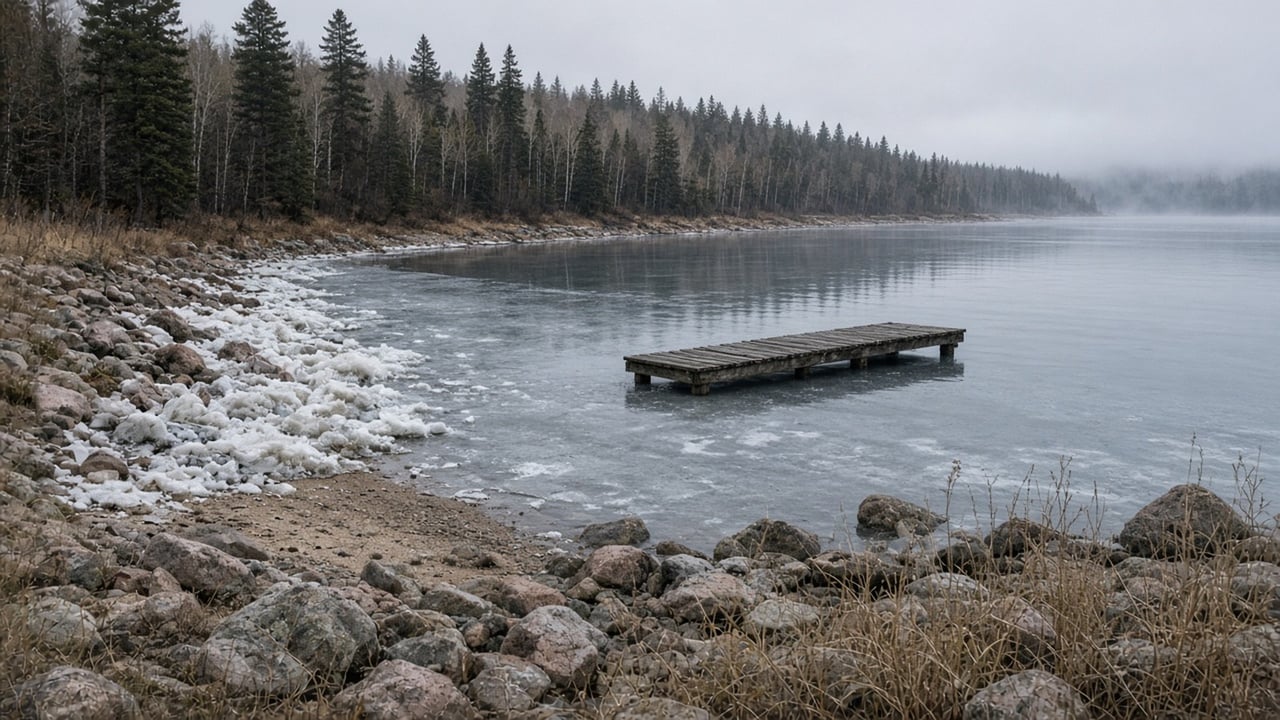
Ice Ridges on Brainerd Lake Homes: What Buyers and Sellers Should Know
November 8, 2026
November 8, 2026
A shoreline that looked smooth in October can look different after a Minnesota winter. Ice on Gull Lake, or on a smaller lake near Nisswa, Crosslake, or Breezy Point, can crack, expand, and shove soil and rock into a mound along the shore. Owners sometimes first notice it in spring: a new ridge of dirt, a tilted wall, or landscaping scraped inland.
Here is the direct answer. Ice ridges, also called ice heaves or ice pushes, form when lake ice shoves soil and rock into a shoreline mound. Size and damage vary by winter, wind, lake shape, and shoreline. Buyers should inspect for ridges, moved walls, and ground scars. Sellers should document and disclose known damage. Altering a ridge may need county or DNR approval. Pricing and inventory change often and should be verified with current local data.
An ice ridge is a mound of soil and rock that lake ice pushes up along the shore. The Minnesota DNR also calls these features ice heaves, ice pushes, or ramparts.
Cracks open in the ice because the top and bottom contract at different rates, and because the edge of the ice is sometimes locked to the shore. Water rises in those cracks and freezes. When the air warms, the ice expands toward land. Repeated warming and cooling lets it creep shoreward and pile material into a ridge. The DNR notes this is more likely in winters with little insulating snow cover.
Ice ridges are not only a problem to erase. Over time they can act as a natural berm. Nutrients collect on the landward side, near-shore plants take root, and those roots help hold soil. Later ice pushes can add more rock to the same mound, which then helps protect the shore. A raw, freshly shoved pile of dirt and rock is a different story from a low, older, vegetated ridge.
Not every lot sees the same ice action, even on the same lake.
Open water gives the sheet more room to expand and more fetch for wind. Parts of Gull Lake can see stronger movement than a small, sheltered bay. A protected shoreline near Pequot Lakes or Deerwood may stay quieter in a winter that scours a wide, exposed bank somewhere else.
A gradual sand or gravel beach can be shoved inland more easily than a rocky, well rooted bank. A lawn graded right to the water often has less buffer than a lot that still has a vegetated berm.
Crow Wing County and Cass County both have a wide mix of these conditions. Homes around Brainerd, Baxter, Nisswa, Crosslake, Lake Shore, East Gull Lake, and Breezy Point sit on large lakes and smaller, quieter ones. The lake name alone does not tell you how a specific frontage behaves in winter.
The Minnesota DNR says ice ridges can damage retaining walls, docks, and boat lifts, and sometimes even a cabin that sits close to the shore. The same force can scrape landscaping, tip trees, shift stairs, and shove rocks and soil inland. The DNR notes that ice can push soil into ridges as high as five feet or more.
One winter may leave only a low scrape. Another may lean a wall or pile material against a shed placed too close to the ice. Personal property left in the path is the easiest loss to prevent and the first thing the DNR suggests moving.
A retaining wall can look solid in a listing photo and still show tilt or fresh gaps after ice-out. The DNR cautions that engineering solutions used to fight ice can be expensive and ineffective. Get advice from a qualified professional and from the county before you build a wall or similar defense.
Do not judge the shore from the living room window. Walk to the water, then along the frontage if you can do so safely and without crossing a neighbor's lot.
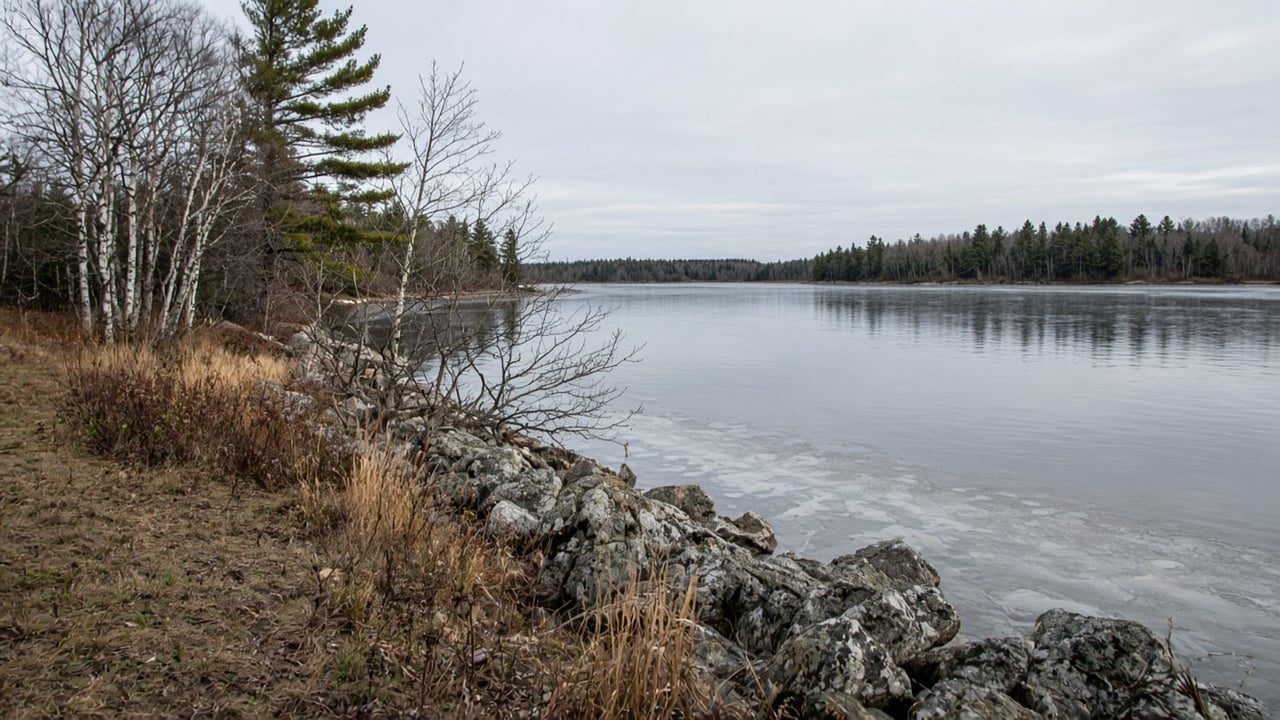
Look for a berm running parallel to the water. An older ridge is often rounded and grown over. A newer ice push may look raw: exposed soil, fresh rock, torn sod, or material piled against a wall or tree.
Study any retaining wall from both ends. Check for lean, cracked blocks, bulging sections, and soil piled on one side. Notice trees and plantings near the water too. Leaning trunks, exposed roots, scarred bark, and shrubs shoved inland are clues.
How close are the house, patio, stairs, and shed to the shore? The DNR notes that required setbacks help keep personal property out of the path of ice and wave action. Ask what the shore looked like after recent thaws. Spring is when new movement is easiest to see.
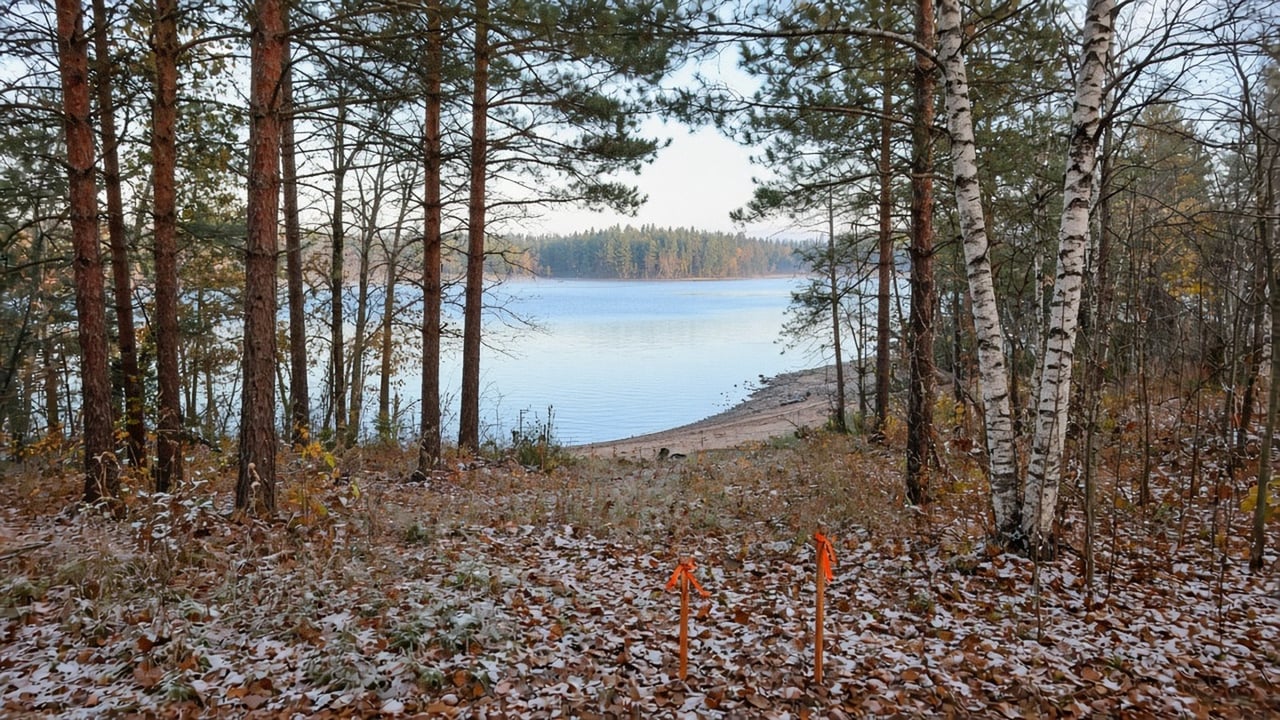
In late fall, established ridges are often still visible as a rise between the lawn and the water. You can see how close walls, stairs, and the house sit to the shore, and whether the bank is a vegetated berm or a tight, graded edge.
In winter, snow may hide details. You can still note the distance from the house to the ice and any visible lean in a wall.
Ask what you cannot see. Has the seller seen ice shove material inland? Has a wall been rebuilt? Was a ridge graded or hauled away? Neighbors and long-time owners near Crosby, Baxter, or farther north toward Crosslake often remember the winters that moved shorelines.
If you buy while the lake is frozen, plan a closer look after thaw. A winter visit is useful, but it is not a substitute for seeing the bare shore in spring.
Sometimes, but it is regulated. The Minnesota DNR says the ideal response is often to leave a ridge and move personal property out of its path. The DNR notes that access can sometimes be gained by ramping over or cutting through a ridge.
An individual DNR Public Waters Work Permit is not required to remove or grade an ice ridge if all of the DNR's stated conditions are met. Those conditions include: the ridge formed from ice action within the last year; the project is exempt from local permits or authorized by a local permit; no more than 200 feet of shoreline is affected; muck, clay, or organic sediment is deposited and stabilized at an upland site above the ordinary high-water level; sand or gravel is handled the same way or graded back to the original lakebed shape, with a finished surface at or below the ordinary high-water level; no extra excavation or replacement fill is added; exposed areas are stabilized right away to prevent erosion; and local zoning officials, the watershed district if there is one, and the soil and water conservation district receive at least seven days of notice before work starts.
Removal or grading must not disturb emergent aquatic vegetation unless a DNR aquatic plant management permit authorizes it. If the work does not meet those conditions, it generally needs a DNR Public Waters Work Permit. Crow Wing County, Cass County, and cities such as Lake Shore, East Gull Lake, and Breezy Point may still require their own approval. Check before you grade, haul material, or rebuild a wall.
Tell buyers what you know about ice on your shore. Surprises after a thaw erode trust faster than an honest description of a long-standing ridge.
Save photographs. Late-fall shots and spring ice-out shots are more useful than a single summer shoreline photo. If a ridge formed or a wall moved, date the pictures.
Keep records of work. If you graded a ridge, rebuilt a wall, or restored plantings, note the year and keep any county, city, or DNR approvals.
Describe the pattern, not just the last repair. A one-time push after an unusual winter is different from a shoreline that moves often. Disclose ice-related damage and repairs you know about, even if the yard looks tidy now.
Ice ridges rarely decide a sale by themselves. They do affect how confident a buyer feels about the shore.
A long-settled, planted ridge can read as a normal Minnesota lakeshore, and in some cases as protection. Fresh damage, a leaning wall, or a house very close to the ice raises more questions.
For resale, show the shore as it is. If ice has been a factor, say so and show the records. For long-term ownership, plan around winter. Keep movable items out of the ice path, watch walls and trees after thaw, and check with the county or the DNR before you alter a ridge.
Market conditions, pricing, and inventory around the Brainerd lakes change often. Verify current local data with an advisor before you decide what any one shoreline feature is worth on a specific property.
No. They are a common winter process on many Minnesota lakes. Judge the specific shoreline and how close structures sit to the ice.
Not always from the DNR, but do not assume the work is unrestricted. A DNR Public Waters Work Permit is not required if every condition on the DNR ice ridge guidance is met. Work outside those conditions generally needs a DNR permit, and local approval may still apply. Verify before you start.
You can see established berms, wall lean, and how close the house sits to the ice. Snow can hide fresh scrapes, so ask for spring photos and look again after thaw.
Not reliably. The DNR cautions that engineered defenses can be expensive and ineffective. Get professional advice and check the rules first.
Yes. Share what happened, when you repaired it, and whether you obtained any required approvals.
They can form on many lakes, but not on every lot every winter. Lake shape, wind, and shoreline makeup all matter.
If you want help reading ice ridge risk on a Brainerd, Nisswa, Crosslake, or Gull Lake shoreline, we will walk the lot with you and tell you what we see. Call or text 218-821-3312 or visit brainerdlakeshomesearch.com.
Stay up to date on the latest real estate trends.

Whether you're buying, selling, or just exploring your options, Noah Goedker brings local insight and honest advice to every step of the process. Let’s move forward—together.