Docks and Boat Lifts on Brainerd Lake Homes: What Buyers and Sellers Should Check
November 4, 2026
Most people tour a lake home from the driveway to the deck. The dock gets a quick look on the way back to the car. That is backwards, because for a lot of buyers the dock is the reason they wanted lakeshore in the first place.
Here is the short answer. When you buy or sell a lake home around Brainerd, treat the dock and boat lift like any other major component. Confirm what is included in writing, check the condition, understand the water depth at the end of the dock, know who takes it in and out each season, and make sure the setup fits the shoreline you actually have. A good dock on the wrong shoreline is still a problem.
Because they decide how you use the water. A swimming beach with a short dock works for kids and kayaks. A pontoon or wake boat needs depth, a lift sized for the boat, and a shoreline that can handle it.
Two homes on the same lake can live very differently. One has a gentle sand bottom and an easy walk to the water. The other has a steep bank, shallow water for 60 feet out, and a dock that has to be extra long just to float a boat. The price may look similar. The summer will not feel similar.
Sometimes. Do not assume. Docks, lifts, canopies, swim rafts, and boat covers are often treated as personal property. Some sellers include them. Some take them to the next place. Some plan to and forget to say so.
For buyers, list every item you expect to stay in the purchase agreement. Brand, size, and type if you can. "Dock and lift" is vague. "Sectional aluminum dock, roughly 40 feet, with the boat lift and canopy currently installed" is not.
For sellers, decide early. If the lift is staying, say so in the listing. It is a real selling point. If it is going with you, say that too. Surprises at the final walkthrough tend to be expensive in goodwill, even when they are cheap in dollars.
You do not need to be an engineer. You need to look.
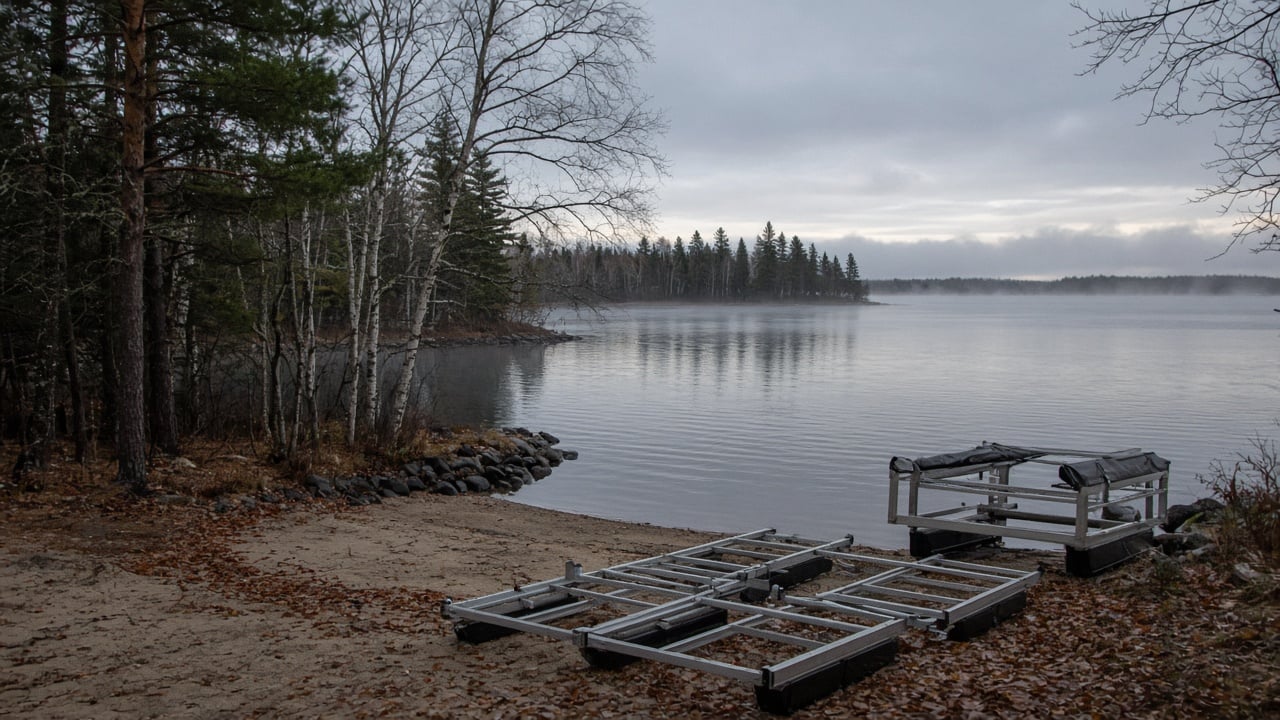
If the home is being sold in late fall or winter, the dock may already be out and stacked on shore. That is fine. Look at it on the ground. In some ways that is easier, since you can see the legs and frame without wading.
Ask for age and service history. A dock company that has handled install and removal for years often knows the setup better than anyone.
This is one of the most overlooked questions on lakeshore. Water levels move from year to year, and a dock that works in a wet June can leave a boat sitting in the mud by late August.
Ask the seller how the setup has worked over several seasons, not just this one. Ask whether they have ever had to extend the dock or move the lift. If you are buying for a specific boat, measure or have someone measure. A sounding pole and a few minutes will tell you more than a listing photo.
Bottom type matters too. Sand, rock, muck, and weeds all affect swimming, boat use, and how stable the dock legs sit.
Around the Brainerd Lakes, most docks and lifts come out every fall and go back in every spring because ice will damage anything left in the water. You either do this yourself, with friends who suddenly have plans that weekend, or you hire a dock service.
Good dock services in areas like Nisswa, Crosslake, Pequot Lakes, and Breezy Point can book up well ahead of each season. If you are buying, ask the seller who they use and whether that company will keep you on the schedule. That one phone number can save you a spring of waiting.
Costs vary by dock size, lift type, access, and the company. Ask for current pricing rather than relying on what a neighbor paid a few years ago.
Usually less than people fear, but not zero. Minnesota has general standards for docks and lifts on public waters, and counties and some cities have their own shoreland rules. Most standard seasonal docks and lifts are fine. Large structures, permanent docks, or anything unusual deserve a closer look.
If the existing setup is oversized, permanently installed, or paired with structures close to the water, ask questions before you close. We covered shoreland rules in more detail in an earlier post. The short version: verify with the county or the Minnesota DNR rather than relying on what was allowed in 1987.
Lake associations sometimes have their own guidelines or preferences too, especially on smaller lakes. Worth asking.
Some properties do not have their own shoreline. They have a shared lot, a deeded access, or a spot on an association dock. That can be a smart way to get lake use at a lower price, but the details matter.
Ask how slips are assigned, whether the right transfers with the sale, who maintains the shared dock, and how costs are split. Get the documents, not a summary from a neighbor. A boat slip that does not transfer is a nice memory, not an amenity.
A well maintained setup that fits the shoreline helps a lake home show better and makes the property easier to picture. It also removes a to do item for the next buyer, and buyers notice that.
A worn out dock does not usually kill a sale, but it gives a buyer a reason to negotiate. Sellers with an aging dock can either replace or repair ahead of listing, or price with the condition in mind. Neither is wrong. Pretending the dock is fine when it wobbles in the photos is the one approach that tends not to work.
For buyers, shoreline quality matters more than the dock itself. You can replace a dock. You cannot easily change depth, bottom type, or exposure to wind.
If your dock is already out for winter, take a few steps now.
Summer photos help a winter buyer see what the shoreline looks like in July. Clear information about what is included helps avoid confusion later.
None of these questions are complicated. They just tend to get skipped when everyone is looking at the view.
Do docks and boat lifts usually come with a Brainerd area lake home? It depends on the seller. They are often treated as personal property, so buyers should list every dock, lift, and canopy they expect to stay in the purchase agreement.
Can I inspect a dock in winter? Yes. If the dock is out and stacked on shore, you can look at the frame, legs, decking, and lift parts directly. Ask for summer photos to see how it sits in the water.
Do I need a permit for a dock on a Minnesota lake? Most standard seasonal docks do not, but rules vary with size, design, and location. Verify with the county and the Minnesota DNR, especially for permanent or large structures.
How do I know if the water is deep enough for my boat? Ask the seller how the setup has worked over several seasons and measure depth at the end of the dock. Water levels change from year to year.
Should I hire a dock service? Many lake owners do, since docks and lifts come out every fall around Brainerd. Ask the seller who they use and book early, because schedules fill up.
Does a new dock raise a home's value? A dock in good condition that fits the shoreline helps a home show well and reduces buyer objections. Shoreline quality itself usually matters more than the dock.
If you want help sorting out what a dock, lift, or shoreline means for a specific property, we are happy to walk through it with you. Call or text 218-821-3312 or visit brainerdlakeshomesearch.com.
Elevate Group, eXp Realty.
Stay up to date on the latest real estate trends.



Whether you're buying, selling, or just exploring your options, Noah Goedker brings local insight and honest advice to every step of the process. Let’s move forward—together.